Friday 03 / April / 2026
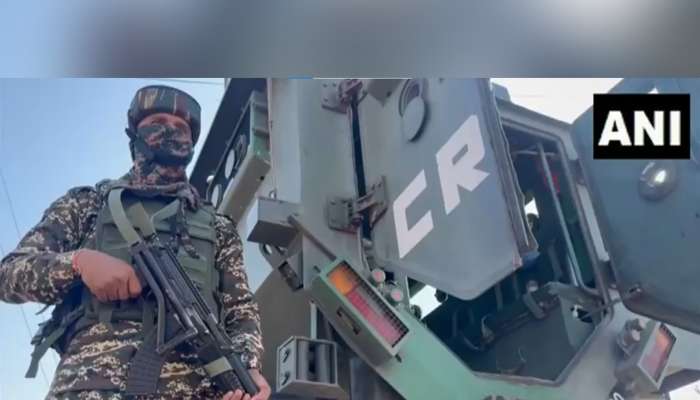
New Delhi: India has long stood at the frontline of the global fight against terrorism, facing persistent threats from militant groups. While recent terror attacks have drawn international attention, they are but the latest in a long and painful series of terrorist strikes that have scarred the nation. In response, India has developed a layered counter-terrorism strategy, one that balances military strength with community engagement, legal reform with social outreach, and intelligence operations with humanitarian efforts.
At the heart of this strategy lies a recognition that terrorism is not just a security challenge but a societal one. Extremist ideologies often prey on vulnerable populations, exploiting economic hardship, social alienation, and misinformation. In recent years, India has increasingly turned to community-centric approaches to counter radicalization and recruitment, particularly in regions like Indian administered Jammu & Kashmir and the Northeast. These initiatives aim to address the root causes of extremism, offering youth meaningful alternatives to violence and fostering resilience within communities.
The Ministry of Home Affairs has institutionalized this approach through its Counter Terrorism and Counter Radicalization division. While the central government provides strategic direction, state governments lead the charge in implementing Countering Violent Extremism (CVE) programs tailored to local contexts. Assam, for instance, became the sixth state to develop a formal CVE strategy, reflecting the growing recognition that community engagement is essential to long-term peace.
In many regions, the Indian Army has emerged as a key actor in this community-centric model. Beyond its role in securing borders and conducting counter-terror operations, the Army has embraced a “hearts and minds” philosophy. Through initiatives like Operation Sadbhavana, it runs schools, vocational training centers, medical camps, and emergency services in remote and conflict-affected areas. These programs are designed not only to meet basic needs but also to instill discipline, patriotism, and a sense of purpose among the youth.
The Army’s efforts have been particularly impactful in curbing recruitment into terrorist ranks. Economic deprivation and lack of opportunity have historically made young people susceptible to extremist propaganda and financial inducements. Terrorist groups have exploited these vulnerabilities, offering support to individuals and their families in exchange for allegiance. Recruitment often occurs through personal networks, friends already involved in terror activities, and is amplified by online platforms that spread radical ideologies. Recognizing this, the Indian Army has launched skill-development programs in partnership with financial services companies, providing youth with viable career paths and economic independence.
One of the most notable campaigns in this regard is “Sahi Rasta,” or “The Right Path.” This initiative focuses on conducting awareness programs, educational workshops, and community events across the Indian administered Kashmir Valley. The campaign addresses not only terrorism but also drug abuse, which often coexists with radicalization. By working closely with local leaders, religious figures, and community groups, the Army ensures that its message reaches deep into society. In Baramulla, for example, senior Army officers and local imams have joined forces to guide youth away from extremist ideologies and toward constructive futures. Their involvement lends credibility and cultural sensitivity to the campaign, making it more effective and inclusive.
The psychological toll of terrorism on youth cannot be overstated. Years of conflict have led to widespread trauma, anxiety, and depression. Many young people have lost family members or witnessed violence firsthand. To address this, the Army has expanded its efforts to include counseling and rehabilitation services. These programs aim to reintegrate radicalized individuals into society, offering them a second chance and helping to rebuild fractured communities. Rehabilitation initiatives operate at the state and local levels, supported by federal and state police forces that monitor online platforms for extremist content.
In July 2025, the Indian Army, in collaboration with the local administration, organised the North Kashmir Education Fest under the theme “Taleem Se Tarakki” (Education for Progress). The event brought together over 3,000 students from across the country, offering counseling, career guidance, and scholarships worth INR 30 million for underprivileged and tribal youth from border districts. This fest not only promoted education but also strengthened the Army’s “Know Your Army” campaign, which encourages military careers and fosters a sense of national pride.
Just days later, the Army launched a cricket league in Pulwama in partnership with civil society organizations and local traders. Featuring 64 teams from various districts, the league served as a platform for youth engagement, talent development, and community bonding. These initiatives are part of a broader effort to nurture local talent, curb disruptive activities, and build trust between the Army and the community. In a region where Pakistan-backed terrorism has long stalled socio-economic progress, such programs offer a beacon of hope and a path forward.
The success of these initiatives lies in their holistic approach. They do not treat security, peace, and development as separate goals but as interconnected objectives. The Indian Army’s presence exemplifies this philosophy. It operates not only as a combat force but also as a stabilizer, peace enforcer, and humanitarian partner. Following Operation Sindoor, the Army’s engagement in the region has deepened, reaffirming its commitment to national unity, regional stability, and public welfare.
Lieutenant Governor Manoj Sinha has echoed this sentiment, advocating for a multi-pronged strategy that combines intelligence, technology, community engagement, and inter-agency collaboration. His vision for “collective vigilance” underscores the importance of involving all stakeholders, government, civil society, and citizens, in the fight against terrorism.
India’s counter-terrorism efforts offer a compelling model for other regions grappling with violent extremism. By addressing the socio-economic and psychological dimensions of terrorism, and by empowering communities to resist radicalization, India is not only securing its borders but also healing its society. The journey is far from over, but the progress made in recent years, especially the dramatic drop in local recruitment into terrorist ranks, speaks volumes about the effectiveness of this approach.
In the broader national narrative, India’s counter-terrorism strategy reflects a deep understanding of the human condition. It recognizes that lasting peace cannot be imposed, it must be cultivated. Through compassion, opportunity, and shared purpose, India is building a future where its youth are not drawn to violence but inspired by hope