Sunday 26 / July / 2026
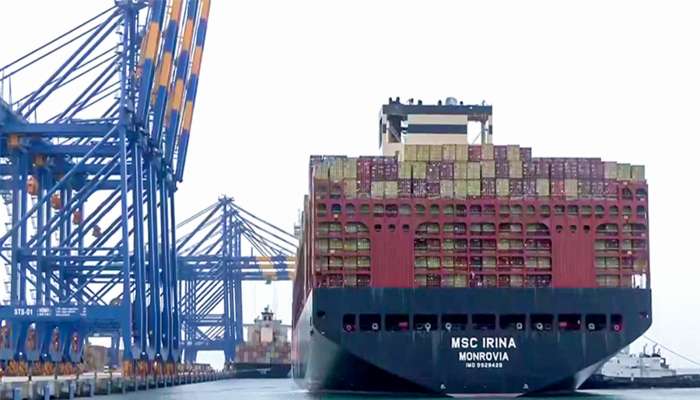
New Delhi: India's trade deficit outlook remains under pressure despite a temporary narrowing in March, with weak export momentum and rising import demand likely to keep the imbalance elevated in the near term, according to a report by Nuvama.
The report noted that India's goods trade deficit narrowed to USD 21 billion in March 2026 from USD 27 billion in February, primarily due to a decline in gold and oil imports. However, this improvement is seen as largely transient, with underlying weaknesses persisting.
"Core deficit (excluding oil and gold) widened... pointing to continued structural pressures on the trade balance," the report highlighted.
For the full financial year FY26, the trade deficit widened sharply to a record USD 333 billion, an increase of about USD 50 billion compared to the previous year. This pushed the goods deficit to around 8 per cent of GDP, up from 7 per cent in FY25, largely driven by elevated gold imports and steady growth in core imports.
The report underscored that export growth remains subdued, posing a key risk to the trade outlook. Goods exports grew just 1 per cent year-on-year in FY26, while services exports also moderated to 8 per cent from 12 per cent in the previous fiscal.
In March specifically, goods exports contracted 7 per cent year-on-year, reflecting broad-based weakness across sectors. Even electronics exports, previously a strong driver, saw growth slow significantly.
On the import side, while headline growth moderated due to a high base, core imports (excluding oil and gold) remained firm, growing around 8-10 per cent, led by demand for machinery, electronics, and chemicals.
The report cautioned that global uncertainties could further weigh on India's export outlook. "A potential shift from supply-side disruptions to a broader global demand slowdown could pose additional downside risks," it said.
Despite these challenges, depreciation in the Indian rupee may provide some relief by improving export competitiveness and partially containing the trade deficit.
Overall, the report suggests that while short-term fluctuations may offer temporary relief, India's trade deficit is likely to remain structurally elevated amid weak exports and resilient import demand.