Sunday 31 / May / 2026
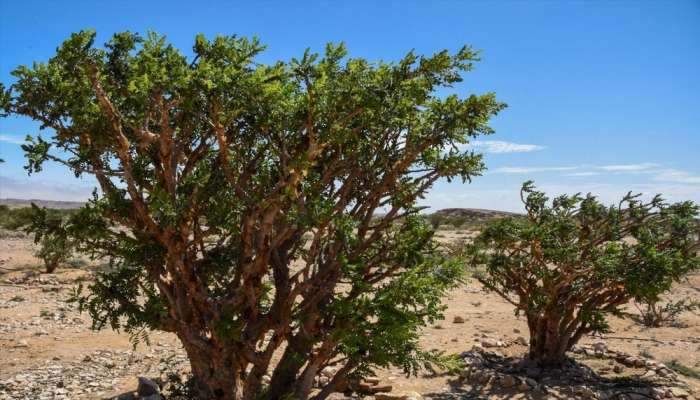
Muscat: The Sultanate of Oman has successfully registered Omani frankincense as an international geographical indication with the World Intellectual Property Organization (WIPO).
The issuance of the international registration certificate marks a milestone that reflects the enduring stature of this ancient product in Omani identity and in global heritage-linked trade.
Nasra Sultan Al Habsi, Director General of Commerce at the Ministry of Commerce, Industry and Investment Promotion, said the registration — the first of its kind in the Gulf region — crowns institutional efforts to protect Omani frankincense and enhance its marketing value in international markets. This is achieved by linking the product to its authentic geographical origin, its distinctive qualities tied to its natural environment and cultural heritage, and by leveraging Oman’s accession to the Geneva Act of the Lisbon Agreement, which provides for the international protection of appellations of origin and geographical indications.
She added that the significance of the international agreement lies in its provision of a unified global framework for registering and protecting products linked to their geographical origin, extending protection beyond national borders to member states within an organised international system. Accession to the agreement is therefore a strategic step for countries possessing products of unique natural, historical, or cultural character, such as Omani frankincense.
Eng. Khalid Hamoud Al Hinai, Director of the National Office for Intellectual Property at the ministry, explained that the international registration represents formal international recognition and inclusion in the international register of the Lisbon System for Geographical Indications, with notification to all contracting parties. This strengthens the product’s legal standing internationally and reflects a significant economic shift in how national intangible assets are managed.
A geographical indication enhances consumer confidence, boosts the competitiveness of Omani products that incorporate frankincense, and enables Omani entrepreneurs and companies to benefit from the global reputation of Omani frankincense — known for its quality and uniqueness — within a recognised international legal framework. It also supports sustainability efforts by encouraging sound production practices, thereby preserving the natural resource and ensuring continued economic benefit for future generations, Al Hinai said.
He added that international registration enhances opportunities to build a cohesive collective brand around Omani frankincense, supporting competitiveness in foreign markets and increasing access to multiple sectors, including fragrances, health products, cosmetics and value-added heritage products.
Registering Omani frankincense as an international geographical indication confirms the protection of national resources, extending beyond the preservation of cultural and historical significance to become a tool for enhancing market value and linking products to an international framework that guarantees protection and preserves distinction.
This consolidates Oman’s presence in the international intellectual property system and affirms that its products are capable of moving from historical and geographical symbolism to legal protection and sustainable economic investment — transforming geographical qualitative resources into a globally recognised competitive advantage.
Al Hinai noted that Omani frankincense holds special importance as more than a commercial product; it is an authentic part of Oman’s civilisational identity, historically associated with the Frankincense Trail and the trade and cultural exchange for which the region has been known for centuries. WIPO has shown direct interest in empowering Omani frankincense producers through projects aimed at developing branding and marketing, enhancing product value, and opening broader horizons in foreign markets.
The protection of geographical indications is not limited to the legal aspect of preventing imitation or exploitation, Al Hinai said. Its effects extend to strengthening the business environment for producers, positively impacting the local economy, empowering producer communities, diversifying income sources, and achieving sustainable economic value based on geographical distinctiveness. The ministry is working to encourage the protection of more geographical indications in Oman, including food products, handicrafts and others, with the aim of preventing the infringement of geographical indication rights both within and outside the Sultanate of Oman.
Badriya Khalfan Al Rahbi, Head of the Trademarks and Geographical Indications Section at the National Office for Intellectual Property, Ministry of Commerce, Industry and Investment Promotion, has defined a geographical indication as a sign used on products that have a specific geographical origin and possess qualities, reputation, or characteristics essentially attributable to that place.
She explained that the dependence of a product’s distinctive qualities on its geographical production area demonstrates the clear link between the product and its original place of production. Geographical indications are typically used for agricultural products, foodstuffs, handicrafts and industrial goods.
While a trademark identifies a good or service with a specific company and often consists of an arbitrary or inventive sign, Al Rahbi noted, a geographical indication ties the product’s name to the geographical area whose influence shapes its attributes.
A trademark can be assigned or licensed to any enterprise anywhere in the world because it is linked to a particular company, whereas any enterprise from the designated place of origin may produce the relevant product according to specified standards. Geographical indications, she added, play a significant role in identifying a product’s source and reliability, maintaining consumer confidence in quality and origin, and avoiding confusion over the source of goods. They also support economic and tourism objectives while preserving traditional cultural expressions.
Al Rahbi further explained that geographical indications represent a strategic asset for nations. Their protection carries great social importance by raising producers’ living standards, encouraging increased production, and securing financial returns. Economically, they enhance a product’s reputation for quality and reinforce the reliability of its geographical source.
Registering a geographical indication creates an intangible asset that adds value, facilitates domestic and international marketing, generates state revenue, stimulates national production, preserves producers’ efforts, and encourages fair competition by motivating others to develop distinctive products according to best practices — thereby supporting the state’s income diversification.
The protection of geographical indications, Al Rahbi said, also preserves the cultural heritage of specific regions. Many distinctive products have historical roots, with their uniqueness rooted in long‑established production traditions, whether in manufacturing methods or ingredient selection. This heritage link actively promotes tourism, attracting visitors and introducing them to the many Omani products that can be protected as geographical indications.
Making frankincense production sites — such as Wadi Dawkah, a natural reserve for frankincense — a tourist destination allows visitors to experience the frankincense trees in their native habitat. It also encourages Omani entrepreneurs and institutions to showcase production stages or offer hands‑on experiences. Such visits may spark further exploration of Oman’s regions, stimulating tourism and motivating local communities to present their unique products — a heritage worthy of display both locally and globally.
Al Rahbi explained that the protection of geographical indications grants the product linked to a specific place of origin a legal right to use its geographical name. That use is restricted to the authentic product meeting approved characteristics and conditions, while preventing misleading use, imitation, or commercial exploitation of the name by products from elsewhere. International registration through WIPO’s Lisbon System extends protection beyond national borders, safeguarding commercial reputation, enhancing market confidence, and raising the product’s international competitive value.
National intellectual property offices grant protection to geographical indications upon request, Al Rahbi noted. Some countries entrust this task to a special body, but most assign it to their national intellectual property offices, as is the case in the Sultanate of Oman.