Thursday 13 / August / 2026
Mildenhall: In a significant diplomatic shift following days of intense friction at the NATO summit, US President Donald Trump on Thursday praised Spain for making a major financial commitment, signalling an end to a standoff that had threatened to fracture bilateral trade and security relations.
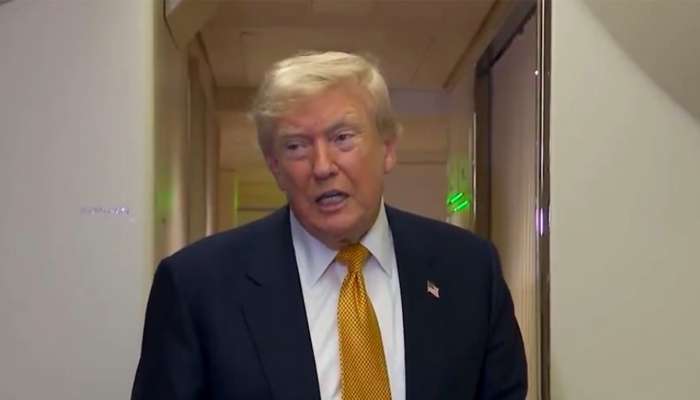
Speaking to reporters aboard Air Force One, President Trump revealed that Spain had "honoured a request for lots of payment" after he had previously threatened to cut off trade ties and dismiss the nation as a "hopeless" ally.
"I will say, I did have issues with Spain, and I still do, but Spain came back all the way today. Spain was very generous today," Trump stated. The President added that the sudden concession prevented a total breakdown in communications, framing the resolution as a victory for his demand-driven foreign policy. "They honoured a request for lots of payment--and if they didn't, we wouldn't even talk to them."
The tension had reached a boiling point during the summit, where Trump had openly directed US Treasury Secretary Scott Bessent to prepare for an embargo on Spanish trade due to Madrid's resistance to NATO's ambitious new defence spending targets.
While most NATO members have moved toward an agreement to increase defence spending to 5% of their GDP by 2035, Spain has been the primary holdout. Despite securing a specific exemption to maintain its military expenditure at 2.1% of its GDP, Madrid faced constant pressure from the US administration, with President Trump frequently labelling the country a "bad partner" and a "wasted cause."
Before the breakthrough, the Spanish Prime Minister's Office had attempted to de-escalate the rhetoric, stating, "Our country enjoys excellent social, cultural, and economic relations with the US, and it is not our intention for that to change."
President Trump noted that despite his lingering concerns regarding Spain's overall defence stance, the sudden financial commitment injected a sense of "great unity" back into the Western alliance.
The President's hardline approach has been a defining feature of his interactions with European allies, consistently pushing for increased contributions to collective security. With this latest development, the administration appears to have successfully leveraged the threat of economic isolation to achieve its immediate financial demands, effectively ending one of the most volatile diplomatic disputes of the current summit.
As the summit concludes, the focus shifts to how these renewed financial pledges will be operationalised within the alliance, even as member states navigate the complex balance between national budgets and shared security responsibilities.