Wednesday 17 / December / 2025
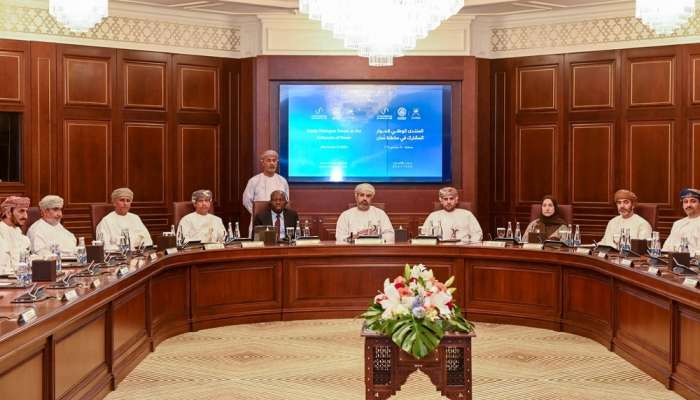
Muscat: The National Forum for Joint Dialogue commenced its proceedings in Muscat on Wednesday, engaging stakeholders in critical discussions aimed at enhancing Oman’s work environment. Central themes included establishing a dedicated platform for exchanging insights and expertise, and addressing the challenges facing the labour market amidst evolving local and global economic dynamics.
In his opening address, Dr. Mahad bin Said Ba’owain, Minister of Labour, underscored that joint dialogue is a cornerstone of Oman’s national approach, fundamental to strengthening the constructive partnership between the government, employers, and workers.
This tripartite collaboration, he stated, is vital for reinforcing economic and social stability and advancing the nation’s sustainable development agenda.
“Oman’s experience over the years has proven that dialogue is far more than a communication tool,” the minister affirmed. “It is an entrenched national value and an effective instrument for resolving challenges, balancing rights with responsibilities, and fostering a cohesive work environment that promotes both productivity and equal opportunity.”
The Minister of Labour highlighted the significant evolution of social dialogue following the enactment of the Labour Law. Article (141) of the law formally established the Social Dialogue Committee, chaired by the Ministry of Labour and comprising representatives from all three production parties. This framework is designed to enhance collective consultation and ensure meaningful participation in shaping labour policies.
This legislative foundation, he explained, facilitated the reconstitution of the Joint Dialogue Committee and has enabled the active engagement of social partners across several specialized bodies.
These include the Committee for Settling Collective Labour Disputes, the Committee for Arbitrating Collective Labour Disputes, and the Occupational Safety and Health Committee.
The Minister of Labour added that to ensure nationwide inclusion, the scope of dialogue has been expanded through subcommittees operating across all governorates. This structure allows labour issues to be addressed at the local level and strengthens communication within workplaces. The Ministry continues its strategic partnership with the International Labour Organization (ILO) through a Technical Committee overseeing the National Decent Work Program, guided by a Memorandum of Understanding signed in 2010 and renewed in 2022. This cooperation ensures access to technical support, expert consultation, and the implementation of programs that contribute to a more robust and sustainable labour market.
The minister further noted that multi-stakeholder national committees, such as the Oman Human Rights Committee and the National Committee for Combating Human Trafficking, have been instrumental in developing a comprehensive national framework. This framework promotes compliance with international labour rights, strengthens protective measures, safeguards fundamental freedoms, and protects vulnerable groups within the workforce.
Concluding his remarks, the Minister of Labour reaffirmed the Ministry’s unwavering commitment to collaborating with all social partners to deepen constructive dialogue, cultivate a fair and sustainable work environment, and bolster Oman’s national economic competitiveness.
Addressing the forum, Gilbert Houngbo, Director-General of the International Labour Organization (ILO), stated that the event reflects Oman’s determined pursuit of a cohesive, advanced, and equitable labour market. “This forum embodies a deep-seated national commitment to fostering cooperation and building trust among all labour market actors,” he said.
He commended the collaborative efforts between the General Federation of Oman Workers and Oman Chamber of Commerce and Industry (OCCI), highlighting progress in enterprise-level collective agreements and initial steps toward sectoral negotiations. “These are positive indicators of a maturing culture of dialogue, which enhances stability, productivity, and social justice,” he added.
The ILO Director-General affirmed the Organization’s continued support for Oman, expressing readiness to assist in reviewing the Labour Law through the lens of international labour standards. This support extends to safeguarding workers’ representatives, strengthening protections against arbitrary dismissal, and delivering capacity-building programs for both employers’ and workers’ organizations.
The overarching aim of the forum is to showcase Oman’s experience as an advanced national model for institutionalizing social dialogue. It serves to review achievements in legislative modernization, trade union development, workforce upskilling, training program expansion, and the strengthening of collective bargaining mechanisms—all aligned with the strategic goals of Oman Vision 2040 for a competitive, knowledge and innovation-driven economy.
The forum’s agenda featured a series of working papers, including presentations on the Ministry of Labour’s experience in dispute resolution through dialogue, Oman Chamber of Commerce and Industry’s perspective on the employer’s role in fostering partnership and the General Federation of Oman Workers’ initiatives to embed a culture of social dialogue.
Additional papers addressed the role of the Social Protection Fund, the empowerment of persons with disabilities, and Oman’s engagement with the platform economy.
The forum was convened with the participation of representatives from the government, employers’ associations, workers’ unions, and numerous institutions concerned with labour market and economic development. Its organization reaffirms Oman’s steadfast commitment to the principles of constructive dialogue and tripartite partnership, which are regarded as fundamental pillars for ensuring enduring economic and social stability and supporting the nation’s sustainable development trajectory. -ONA