Sunday 26 / July / 2026
Sofia: Bulgaria marked a historic turning point on Thursday as it officially adopted the euro, becoming the 21st member of the eurozone nearly two decades after joining the European Union.
Ursula von der Leyen, President of the EU Commission welcomed Bulgaria joining the Euro, "Bulgaria joins the euro area. This milestone reflects years of hard work and commitment. Now it means simpler payments, easier travel and so many new opportunities for Bulgarian businesses."
"I warmly welcome Bulgaria to the euro family and Governor Radev to the ECB Governing Council table in Frankfurt" said Christine Lagarde, President of the European Central Bank (ECB). "The euro is a powerful symbol of what Europe can achieve when we work together, and of the shared values and collective strength that we can leverage to confront the global geopolitical uncertainty that we face at the moment."
Kristalina Georgieva the head of the IMF also welcomed Bulgaria to the Euro, "Bulgaria's accession to the euro area stirs many memories--from the turbulent inflation in the 90s to today's hard-won stability. I've lived this journey."
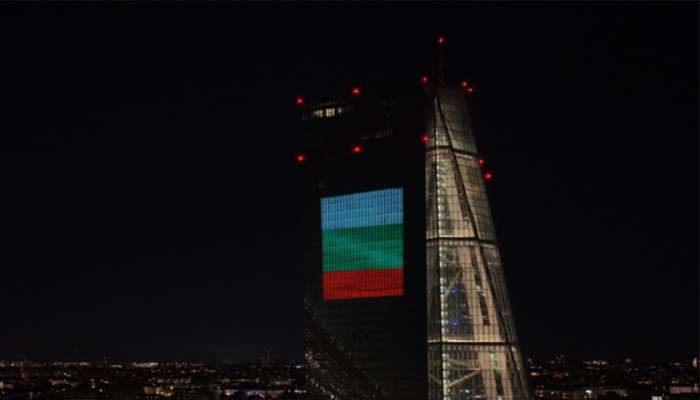
The ECB also marked the historic milestone of Bulgaria's official adoption of the Euro by lighting up its main building in Frankfurt, symbolising the integration and unity of 358 million Europeans who use the euro as their currency.
With Bulgaria joining the euro area, the Bulgarian National Bank, the country's national central bank, becomes part of the Eurosystem and the Governor of the Bulgarian National Bank gains a seat on the Governing Council of the ECB.
According to the Bulgarian News Agency BTA News, until the end of January, the Lev will remain a legal means of payment alongside the euro, and from February 1 the euro will become the only official currency. Until August 8, 2026, prices will continue to be displayed in both euros and leva.
Throughout January, people will be able to make cash payments in retail outlets using both leva and euro, while retailers will be obliged to give change entirely in only one of the two currencies. Retailers are free to decide whether to accept mixed payments in two currencies within a single transaction, but this decision must be clearly indicated in a visible place in the store.
However, some Bulgarians worry that using the euro will push up prices, or are suspicious of a domestic political establishment that is in crisis, reported Reuters.