Thursday 05 / February / 2026
Iranian and US officials confirmed on Wednesday that a meeting between their countries would be held in Muscat, the capital of Oman, on Friday.
Earlier Wednesday, a report surfaced that negotiations between the sides were falling apart over disagreements about the format and venue, raising doubts about the talks' fate.
However, Iranian Foreign Minister Abbas Araghchi announced that the nuclear talks are now scheduled for Friday in Muscat. "I'm grateful to our Omani brothers for making all the necessary arrangements," he wrote on X.
White House officials confirmed to news agencies that the meeting would take place in Oman on Friday. Earlier this week, officials said the meeting would likely happen in Turkey.
Disagreements about the agenda for the talks
Despite the confirmation of the talks, there was no indication that the sides had found common ground on the agenda.
Iran has pushed to restrict the negotiations to discussing its long-running nuclear dispute with Western countries.
However, on Wednesday, US Secretary of State Marco Rubio presented a different view, telling reporters, "If the Iranians want to meet, we're ready."
He added that talks would have to include Iran's ballistic missile program, its support for armed proxy groups in the Middle East, and its treatment of its own people, in addition to nuclear issues.
Meanwhile, a senior Iranian official told the Reuters news agency that Iran's missile program was "off the table." Another senior Iranian official said that Tehran would welcome negotiations over the nuclear dispute, but US insistence on addressing non-nuclear issues could jeopardize the talks.
rump continues to pile pressure on Iran
Amid the uncertainties of the talks preparations, US President Donald Trump continued to up the pressure on Iran's supreme leader, Ayatollah Ali Khamenei.
"I would say he should be very worried," Trump said in an interview with US broadcaster NBC News.
According to Trump, Iran was planning a new nuclear facility in response to US strikes on Iranian nuclear sites during Israel's war with the Islamic Republic in June.
"They were thinking about starting a new site in a different part of the country," Trump told NBC. "We found out about it, I said, 'You do that, we're going to do very bad things to you.'"
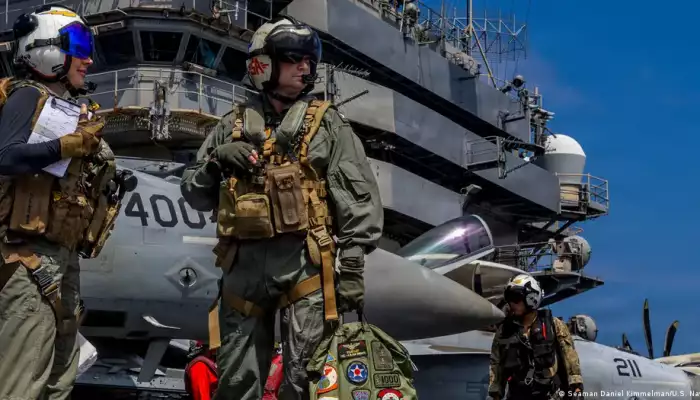
In recent weeks, Trump has significantly increased the US military presence in the region and has refused to rule out new military action.