Wednesday 06 / May / 2026
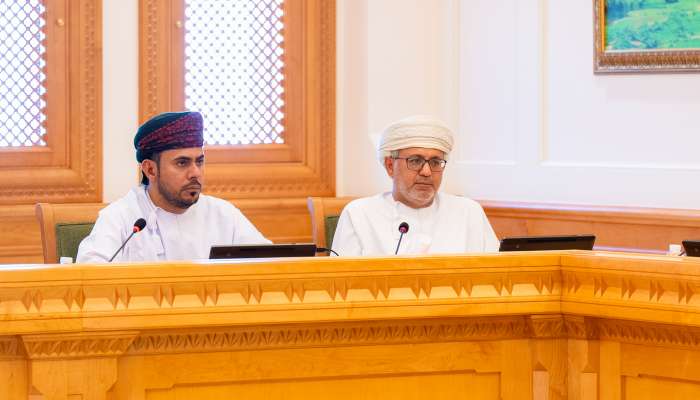
MUSCAT: The Education, Scientific Research and Innovation Committee of the Shura Council discussed a proposal to introduce a legal studies subject within the school curriculum for grades ten to twelve, as part of its ongoing efforts to strengthen the education system and enhance initiatives related to education, scientific research, and innovation.
During its meeting on Wednesday, the Committee, in the presence of H.E. Hamoud Saif Al Saadi, Member of the Council and proponent of the initiative, examined the importance of integrating legal education at the secondary level. Members highlighted that introducing such a subject would enhance students’ legal awareness, deepen their understanding of laws and regulations governing various aspects of daily life, and contribute to shaping responsible behaviour and respect for legal frameworks.
The Committee further noted that linking students to fundamental legal concepts from early educational stages would help develop a generation that is more aware of its rights and responsibilities, and better equipped to engage with societal issues in an informed and responsible manner.
Discussions also explored international best practices in legal education and the possibility of adapting them to align with the national educational environment. Members reviewed key aspects related to curriculum development, including technical, administrative, and financial requirements. These included curriculum design, the availability of qualified teaching staff, and mechanisms for evaluation and follow-up.
The Committee emphasised the need for a comprehensive study to assess the anticipated impact of the proposed subject on students and the broader educational ecosystem before finalising recommendations to the relevant authorities.
In a separate agenda item, the Committee reviewed a proposal submitted by H.E. Khamis Hamad Al Ghafri, Member of the Council, to launch a joint educational, awareness, and training programme between the Ministry of Education and the Royal Oman Police. The programme would target students in grades eight, nine, and ten.
The initiative aims to enhance early awareness among students and equip them with knowledge and skills to address behavioural and intellectual challenges, including risky behaviours, ideological deviations, and the negative impacts of modern technology. It also seeks to reinforce values of self-discipline, individual responsibility, and respect for laws and regulations, while strengthening positive engagement between students and state institutions.
The proposal reflects the importance of institutional partnerships—particularly between educational and security entities—as part of an integrated preventive framework that combines educational awareness with practical and behavioural guidance.
Members reviewed regional and international models that demonstrate the effectiveness of collaboration between schools and law enforcement agencies in improving student awareness and promoting positive behaviour. The proposed programme includes thematic areas such as drug awareness, cybersecurity, road safety, prevention of bullying and school violence, and the promotion of discipline and responsibility.
Implementation mechanisms were also discussed, including school-based awareness lectures, training workshops, field visits, and interactive activities involving specialists from the Royal Oman Police. The Committee stressed the importance of enhancing student engagement and ensuring the effectiveness of awareness messages through practical and participatory approaches.
Members raised several questions regarding implementation readiness, coordination between relevant entities, target groups, and methods for measuring outcomes. The proponents clarified the objectives and operational principles of the initiative.
The meeting was chaired by H.E. Jamal Ahmed Al Abri, Deputy Chairman of the Education, Scientific Research and Innovation Committee, and attended by H.E. Mansour Zaher Al Hajri, Deputy Chairman of the Shura Council, along with Members of the Committee.
ENDS