Wednesday 01 / July / 2026
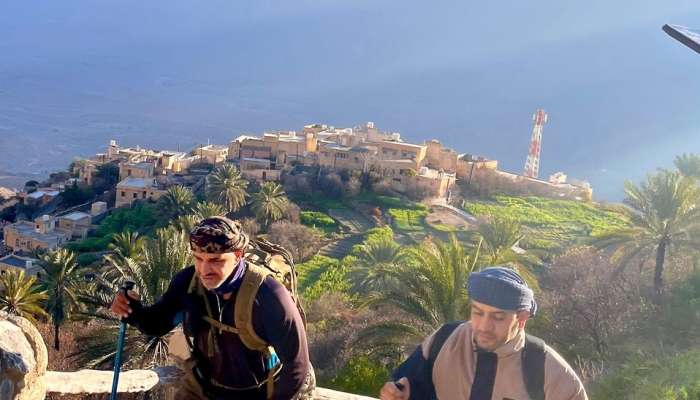
Muscat— Mountain hiking and free walking have witnessed remarkable growth in the Sultanate of Oman in recent years, fuelled by increasing interest among young people in outdoor activities that combine adventure, nature and exploration. What began as recreational excursions has evolved into a thriving community movement that supports sustainable tourism, environmental conservation and healthier lifestyles while introducing visitors to the country's rich natural and cultural heritage.
Oman's diverse geography, stretching from towering mountain ranges and deep valleys to pristine beaches and centuries-old villages, has provided ideal conditions for the rapid expansion of hiking activities. In response to the growing demand, local adventure groups and companies led by young Omanis have emerged to organize professionally managed hiking trips that adhere to safety standards while offering participants immersive experiences in some of the country's most spectacular landscapes.
Those involved in the sector say hiking today extends well beyond physical exercise, serving as a means of self-discovery, improving mental and physical health, strengthening community bonds and creating new opportunities for domestic tourism and local economic development.
Mahmoud bin Abdullah Al-Amri, Chief Executive Officer of "Change Your Routine" Adventures, said the group's journey began in 2016 with a small circle of friends who spent weekends exploring mountains and valleys across Oman.
He explained that sharing photographs and videos of those trips on social media quickly attracted interest from many young people eager to experience similar adventures. However, limited public knowledge about mountain trails and outdoor safety highlighted the need for a structured organization capable of providing safe, professionally managed experiences.
Al-Amri said hiking has become a lifestyle rather than merely a recreational activity, giving participants an opportunity to disconnect from daily pressures, reconnect with nature and discover Oman's remarkable natural beauty and historical landmarks.
He noted that the initiative has expanded rapidly from a handful of participants into a vibrant community comprising hundreds of members representing different age groups and nationalities. Today, the organization provides certified trail leaders, specialized safety equipment, satellite tracking systems, camping expeditions and multi-day adventure trails both within Oman and abroad.
Reflecting on the group's early years, Al-Amri said one of the biggest challenges was the shortage of accurate digital maps of mountain trails and the difficulty of accessing remote natural sites. These obstacles required organizers to conduct extensive field surveys and pre-trip assessments to evaluate routes and ensure participant safety while simultaneously raising public awareness about hiking as a structured outdoor activity.
He added that every destination is selected after careful assessment of terrain, trail difficulty, weather conditions, safety requirements and the capabilities of participants, whether they are beginners, families or experienced adventurers.
According to Al-Amri, one of Oman's greatest advantages is its extraordinary geographical diversity, allowing hikers to move within short distances between mountains, valleys and coastal environments while also experiencing the unique culture and hospitality of traditional Omani villages.
For participants, hiking has become an activity that positively influences everyday life.
Ahmed bin Saif Al-Shariqi, head of the Sony Mountain Adventures team, said his passion for nature and desire to experience something different motivated him to join hiking groups, seeking an activity that combined fitness, enjoyment and exploration.
He explained that regular participation enabled him to discover new destinations while building friendships with people who share similar interests. The experience also strengthened his connection with nature and broadened his understanding of different communities and cultures.
Al-Shariqi said hiking significantly changed his lifestyle by encouraging regular physical exercise, improving time management and strengthening personal discipline. It also deepened his appreciation of environmental protection and the importance of preserving natural resources.
Among his most memorable experiences are expeditions to Jabal Akhdar, as well as hikes through valleys and natural pools where long-distance trekking was combined with exploration of Oman's breathtaking scenery.
He added that hiking has developed numerous personal skills, including planning, teamwork, leadership, decision-making and the ability to respond effectively to changing field conditions while consistently applying safety procedures.
He stressed that hiking delivers significant physical and mental health benefits by improving cardiovascular fitness, increasing endurance, reducing stress and enhancing overall well-being.
Al-Shariqi encouraged young people interested in outdoor adventures to participate responsibly, emphasizing that proper equipment and adherence to safety guidelines make hiking both enjoyable and secure.
Experts believe hiking groups have also become powerful promoters of domestic tourism by introducing visitors to lesser-known natural attractions across Oman.
Adventure enthusiast Salem bin Yaqoub Al-Salti said organized hiking groups have played a major role in discovering, documenting and promoting numerous mountain trails, valleys and scenic destinations that previously received little public attention.
He noted that social media has been instrumental in this transformation, with photographs and videos shared online showcasing Oman's remarkable environmental diversity and inspiring more people to explore its natural landscapes.
Al-Salti explained that opening new trails helps distribute tourist movement more evenly across the country instead of concentrating visitors at a limited number of well-known sites. This supports local communities while bringing attention to regions with significant tourism potential.
He observed that adventure tourism has evolved far beyond mountain hiking to include cave exploration, specialized trekking routes and other outdoor adventure experiences that appeal to a growing segment of travellers.
According to Al-Salti, this expanding sector offers promising economic opportunities by supporting local guides, guesthouses, restaurants, handicraft producers and small businesses, thereby increasing tourism's contribution to local economies.
Environmental sustainability remains a key priority for those active in the sector.
Adventure enthusiast Ibtihaj bint Mohammed Al-Bahri said hiking groups can become valuable partners in protecting the environment by promoting responsible tourism practices and encouraging positive environmental behaviour among participants.
She explained that organized hiking trips now incorporate environmental awareness alongside recreation, reminding participants to leave no litter, collect waste already present, stay on designated trails, avoid damaging vegetation or wildlife and use reusable equipment wherever possible.
Al-Bahri said volunteer initiatives to clean natural sites and educate participants have produced encouraging results, helping establish environmentally responsible habits that extend beyond hiking trips.
She warned, however, that growing visitor numbers have also created challenges, including littering and activities that negatively affect the natural landscape.
Achieving a balance between tourism development and environmental conservation, she said, requires close cooperation among government authorities, organizers and visitors while fostering a culture of environmental responsibility.
Looking to the future, Amira bint Abdullah bin Salem Al-Kharousi, head of the Women's Committee at the Sports Centre in Al-Awabi, expressed confidence that hiking and free walking have strong growth prospects in Oman.
She pointed to rising participation in hiking events as evidence of growing public enthusiasm and said the activity provides young people with opportunities to improve their health, discover nature, develop leadership and teamwork skills, and pursue self-employment opportunities linked to tourism.
Al-Kharousi added that outdoor adventures also strengthen social relationships and help reduce excessive dependence on smart devices by encouraging direct human interaction and teamwork.
She stressed that local adventure teams would benefit from greater institutional support through specialized safety training, simplified organizational procedures, expanded media coverage and improved infrastructure for hiking trails.
Among her recommendations were expanding training programmes for trail leaders, installing directional signs, integrating hiking routes with global digital mapping platforms, improving visitor facilities, establishing rest areas and creating outlets that market local products.
She also highlighted the importance of strengthening emergency response, rescue services and safety infrastructure in mountainous areas while diversifying activities to suit the characteristics of different destinations.
Al-Kharousi emphasized that both government institutions and the private sector have an essential role to play in supporting the industry through infrastructure investment, tourism promotion, training initiatives and logistical support.
She concluded by encouraging young people to transform their passion for adventure into meaningful experiences that build character, promote healthy living and contribute to community development, saying Oman's diverse natural environment remains an open invitation for exploration, learning and unforgettable experiences.
With community participation continuing to grow and awareness of sustainable tourism steadily increasing, mountain hiking and free walking are entering a new phase of maturity and organization in Oman. The sector is increasingly viewed as an important contributor to improving quality of life, promoting environmental stewardship, stimulating domestic tourism and strengthening the Sultanate's position as an emerging destination for adventure and nature-based tourism.