Saturday 11 / July / 2026
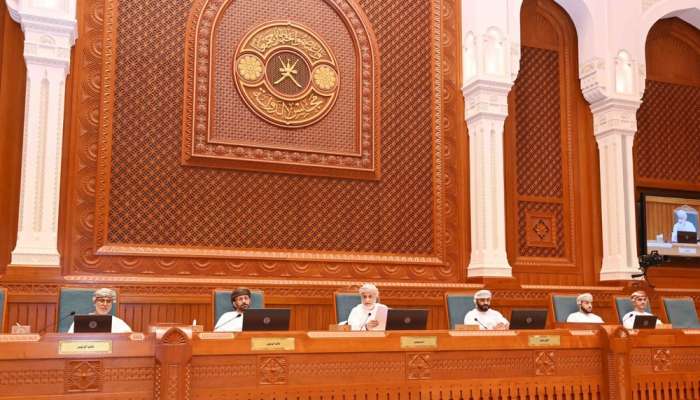
Muscat: The State Council will conclude its third ordinary session of the eighth term on Sunday, in accordance with Article 41 of the Council of Oman Law and based on the Royal directives of His Majesty Sultan Haitham bin Tarik .
The session continued the Council's role in strengthening legislation, reviewing public policies and supporting national development in line with the objectives of Oman Vision 2040.
Khalid bin Ahmed Al Saadi, Secretary-General of the State Council, , said the Council maintained an integrated institutional approach during the session, ensuring its work was based on scientific analysis and objective evaluation to enhance legislative quality and support decision-making.
During the session, the Council held 10 public sittings, discussing 23 topics, including the draft Eleventh Five-Year Development Plan (2026–2030), the 2026 State General Budget, 13 draft laws referred by the Council of Ministers, and eight specialised studies covering economic, social, educational, technological and administrative issues.
The Council gave particular attention to the Eleventh Five-Year Development Plan and the 2026 State Budget, with both documents first examined by the expanded Economic and Financial Committee before being debated in plenary sessions and submitted to the Council of Ministers.
The Council also reviewed 13 draft laws spanning legal, economic, social and technical sectors. In addition, it held two joint sessions with the Shura Council to deliberate on 12 draft laws requiring consensus between the two chambers.
As part of its research role, the Council completed eight studies and referred them to the Council of Ministers. The Council's Office held six meetings, discussing 63 topics and issuing 52 decisions, while organising eight sessions with government entities and other stakeholders to review committee work and external participation reports.
The Council approved the formation of three special committees to study comprehensive economic development indicators under Oman Vision 2040, governance of the State's administrative apparatus and its role in empowering the private sector, and sustainable investment models for endowments (waqf) in Oman.
Strengthening cooperation between the executive and legislative branches remained a key priority. The Council's leadership held two meetings with the Council of Ministers under Article 77 of the Council of Oman Law to discuss institutional integration, implementation of the Eleventh Five-Year Development Plan and mechanisms to enhance government performance.
Standing committees held 44 main meetings and 88 subcommittee meetings, while special committees conducted 20 main meetings and seven subcommittee meetings. Committees also hosted 51 meetings with representatives from government agencies, private sector institutions, experts and specialists to support legislative reviews and studies.
Committee work focused on a broad range of national priorities, including legislation, economic policy, labour markets, tourism, education quality, scientific research, digital transformation, innovation and water resource management.
The Council also maintained its active role in parliamentary diplomacy by strengthening cooperation with regional and international legislative bodies, while continuing outreach programmes that introduced university and college students to the Council's legislative responsibilities and its role in the national governance framework.
Al Saadi said the achievements of the third ordinary session reflect the State Council's commitment to enhancing legislative efficiency, supporting national development, strengthening institutional cooperation and contributing to the realization of Oman Vision 2040.