Sunday 26 / July / 2026
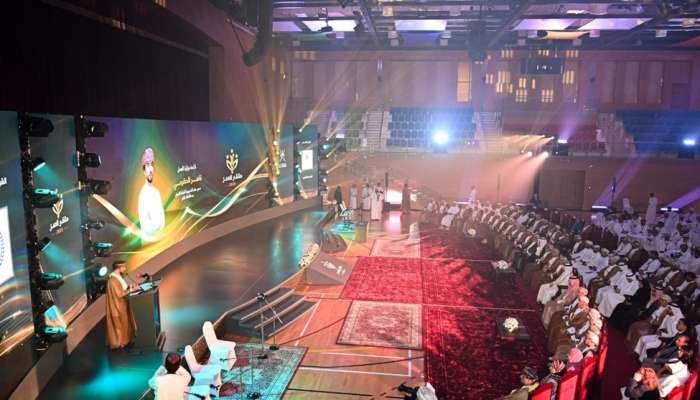
Salalah: The activities of the Work Forum 2026 commenced at the Sultan Qaboos Youth Complex for Culture and Entertainment in Salalah on Sunday.
Organised by the Ministry of Labour, the forum is part of its ongoing efforts to foster national dialogue on the future of the labour market, develop policies and legislation, and foresee economic and technological transformations, thereby contributing to building a more efficient, flexible, and sustainable labour market. The event will run through 13 August.
The opening of the forum was held under the auspices of Sheikh Salim Mustahail Al Maashani, Advisor at the Diwan of Royal Court, in the presence of several officials from within and outside the Sultanate of Oman.
Nasser Salim Al Hadrami, Director General of the Directorate General of Labour in Dhofar Governorate, delivered a speech emphasising that the Ministry of Labour is moving steadily towards developing the labour market through partnership and innovation.
He noted that the launch of the National Employment Policy represents a strategic milestone laying the groundwork for a new phase in national talent development and converting it into a driving force for economic growth, thus enhancing the labor market's readiness for future requirements.
For his part, Fayez Ali Al Mutairi, Director-General of the Arab Labour Organization, praised the qualitative development achieved by the Sultanate of Oman over the past two years in its labour system.
This has been realised through completing executive frameworks for the Labour Law, updating the social protection system, and issuing legislation and regulations governing modern work patterns, alongside developing the unified system for extending insurance protection to GCC citizens working outside their home countries, and issuing the occupational diseases regulation, thereby strengthening the social protection ecosystem and establishing a safer and more stable work environment.
In turn, Mohammad Hassan Al Obaidli, Director General of the Executive Bureau of the Council of Ministers of Labour and Council of Ministers of Social Affairs in the GCC States, affirmed that GCC countries have achieved tangible progress in developing labor legislation, social insurance, employment and training programs, digital transformation, and occupational safety. He underscored the importance of enhancing Gulf coordination, exchanging expertise, developing joint indicators to anticipate labor market needs, and building regional and international partnerships that contribute to supporting the development journey.
The opening ceremony witnessed the launch of the National Employment Policy, which aims to address employment challenges, organise supply and demand sides in alignment with economic and social policies, and provide decent and fair job opportunities.
This is to be achieved by developing the skills of the national workforce, aligning them with current and future labor market needs, enhancing labor market governance, raising the efficiency of its institutions and programs, and mitigating the repercussions of crises, thereby supporting labor market recovery and placing human capital at the core of development.
The opening ceremony also featured the screening of three visual films titled "Oman: Land of Beauty and Opportunity," "Empowerment and Localization," and "Inspiring Entrepreneurs," alongside honoring strategic partners, success partners, and a number of entrepreneurs.
On the sidelines of the forum, the student projects exhibition "Future Talents: Thought and Action" was inaugurated. Running until 29 July, the exhibition showcases examples of student projects and innovations, reflecting youth capabilities for innovation, promoting an entrepreneurial culture, and linking entrepreneurial ideas with labor market needs.
The forum's activities also include organising the Work Horizons Forum titled "Toward a Safe and Sustainable Labor Market," a meeting between the Minister of Labour and business owners, labor market labs, an excellence and leadership honoring ceremony, the Individual and Institutional Excellence System Forum, and the "Government Readiness for a Sustainable Future" conference.
It is worth noting that the forum serves as a national platform for dialogue, experience exchange, and partnership building, as well as discussing priority labor market issues to contribute to policy development, productivity enhancement, national talent empowerment, and the establishment of a more competitive and sustainable work environment, ultimately leading to a labor market capable of keeping pace with changes and turning challenges into developmental opportunities.