Tuesday 04 / August / 2026
Muscat: Oman is becoming an increasingly attractive market for investors and the evidence goes well beyond sentiment as evident from the Sultanate's sovereign credit profile which has materially strengthened, according to an industry watcher.
Fitch upgraded Oman to investment grade (BBB-, from BB+) on the back of sustained fiscal discipline, and S&P reaffirmed its own investment-grade rating in March 2026, notably during a period of heightened regional tension, which itself signalled confidence in Oman's ability to absorb external shocks, said Shahneel Syed, Chief Operating and Transformation Officer, Graystone Capital.
“On the capital markets side, this is being reinforced by the Oman Investment Authority's divestment programme, which has brought a wave of state-linked companies to market and raised close to $4 billion since 2023,” he said.
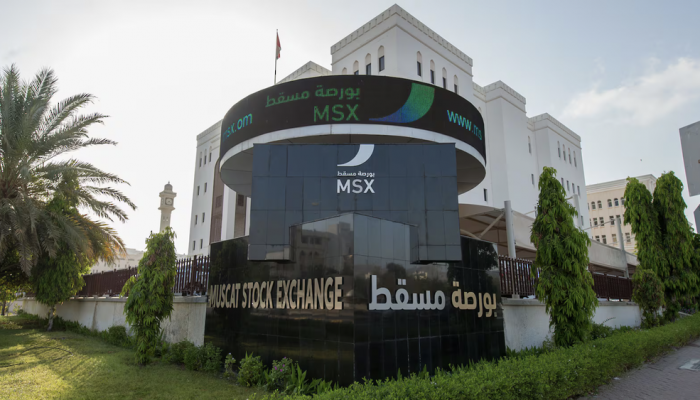
The MSX has also structurally re-rated: market capitalisation has grown by more than 59% since 2020 to over OMR37 billion today, and MSX is actively working to meet MSCI and FTSE Russell criteria for emerging market inclusion, targeted for 2027-2028. “Perhaps most tellingly, foreign investors still account for less than 15% of MSX trading volume — which is less a weakness than a sign of substantial untapped headroom as international allocators take note of Oman's improving fundamentals and comparatively attractive valuations,” Shahneel Syed said.
MSX index performance
Elaborating about Muscat Stock Exchange (MSX) index performance in the first half of 2026 he said that the bourse has done exceptionally well, even after accounting for the volatility of recent months. The MSX 30 index rose 28% in the first half of 2026, comfortably crossing 7,500 points and marking the best first-half performance of any GCC exchange.
“The index achieved three consecutive record milestones during the period: it broke through 6,000 points on 5th January, then 7,000 points on 11th February, and 8,000 points on 29th March, a level not seen since 2008,” Shahneel Syed said. The rally extended into April, with the index touching an intraday high of 8,397 points on 4th May, before easing back on profit-taking and regional headwinds to close the half at around 7,507 points.
The trading activity behind this move has been just as remarkable as the index level itself. Total trading value for H1 2026 reached nearly OMR7 billion, an increase of roughly 650% year-on-year, again, the fastest growth rate of any Gulf exchange.
Market capitalisation rose to OMR36.72 billion by the end of June, an increase of OMR4.71 billion since December, while the number of executed transactions rose to 733,000, roughly five times the volume recorded in the same period last year. “This combination of price appreciation and genuine liquidity growth is what distinguishes this rally from previous, thinner rises in the MSX's history,” he further added.
Elaborating about MSX sectoral indices growth, Shahneel Syed said the Financial sector index has been the standout performer for much of 2026. It surged 13.6% in February alone, driven heavily by banking stocks. This reflects both improved bank profitability and renewed investor appetite for Oman's well-capitalised banking sector, which has also benefited from higher-for-longer regional interest rate conditions.
The Industrial sector index has also performed strongly, briefly climbing above 10,100 points in April while the Services sector index has posted more modest but still positive gains. The Sharia-compliant index has broadly tracked the main index's direction, typically in the 570-670-point range through the year. “It's worth noting that all three sectoral indices have moved together fairly closely during both the rally and the subsequent pullback, suggesting the current cycle is being driven by broad market sentiment and macro factors as much as sector-specific stories,” he further added.
Asked whether the ongoing regional instability has affected sentiment on the MSX, he said “Yes, quite directly, though the effect has been more pronounced in trading patterns than in underlying fundamentals.” Following the index's peak of 8,397 points on 4th May, escalating tensions linked to the wider Middle East conflict weighed heavily on Gulf markets generally, and the MSX was not immune, the index gave back its gains over successive weeks, falling to around 7,959 points in mid-May, then to roughly 7,634 points in mid-June, and trading in the 7,200-7,500-point range through July as investors booked profits and waited for greater clarity.
“That said, two things are worth emphasising for investors weighing this volatility. First, even after the pullback, the MSX remains up meaningfully for the year and has consistently outperformed most GCC peers through the turbulence, this has been a market-wide, not Oman-specific, phenomenon.”
“Second, Oman's own risk profile has arguably been reinforced rather than undermined during this period: S&P's decision to reaffirm the country's investment-grade rating in March 2026, explicitly citing Oman's fiscal resilience amid regional tensions, sent a reassuring signal to institutional investors that the Sultanate's diplomatic positioning and prudent fiscal management provide a genuine buffer, even if share prices in the short term remain correlated with the broader region's risk sentiment,” he added.