Friday 28 / August / 2026
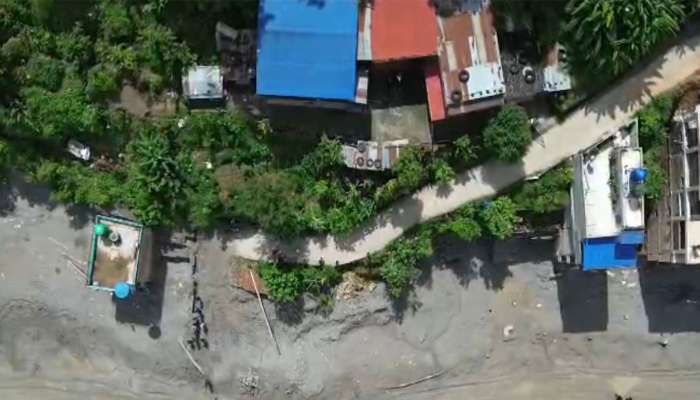
Kathmandu: The death toll from Nepal's devastating flash flood in the Bhotekoshi River area of Rasuwa has risen to 538 while 977 people are still missing, according to an update from Nepal's National Disaster Risk Reduction and Management Authority (NDRRMA).
The figures, as of 3 PM (local time) on Friday, show a grim picture of the scale of the disaster as authorities continue search, rescue and relief operations across the affected areas following the catastrophic flooding on Wednesday.
Of the 538 bodies recovered, the largest number has been recorded in Chitwan, with 221, followed by 134 in Nawalparasi East.
Authorities have also recovered 46 bodies or human remains in Gorkha, 37 in Nuwakot, 33 in Dhading, 28 in Tanahun, 27 in Nawalparasi West and 12 in Rasuwa, according to the NDRRMA figures.
The number of people reported missing stands at 977, including foreign nationals, Nepali citizens living abroad who were visiting Nepal, security personnel and government officials.
Foreign nationals account for 517 of those reported missing, while 161 people were reported missing through the Rasuwa District Emergency Operations Centre (DEOC).
Another 127 are Nepali citizens living abroad who were visiting Nepal, while 66 were reported missing through the Makwanpur DEOC.
The missing list also includes 45 Nepal Army personnel, 28 Nepal Police personnel, 15 Customs Office personnel, 13 Armed Police Force Nepal personnel, four Immigration Office personnel and one person reported through the Nuwakot DEOC.
At least 73 people have been injured, including 43 in Rasuwa, 27 in Nuwakot and three in Dhading.
Authorities have also mobilised 14,821 security personnel for search and rescue operations, the NDRRMA report says. The deployment comprises 6,698 Nepal Army personnel, 4,473 Nepal Police personnel and 3,650 personnel from the Armed Police Force Nepal.
Rescue teams have rescued 3,742 people so far. Nepal Army and private helicopters have carried out 78 flights as part of the rescue effort.
The scale of the operation has been compounded by damage to roads and other infrastructure, leaving some areas difficult to access.
Meanwhile, NDRRMA said the Kathmandu-Tokha-Chhahare-Gadkhar Bridge-Aap-Narja-Lachyang-Sarmathli-Patikharak road section via Bogtitar, Kalikashthan and Dhunche, a key road link, has become operational for small four-wheeled vehicles.
"With the road section becoming operational, it has been reconnected to the Rasuwa road network," NDRRMA said in an update posted on X.
The reopening provides a road connection for the movement of people and relief supplies into the affected region as rescue and recovery efforts continue.
The Nepalese government also released NPR 10 million each for Rasuwa and Nuwakot and NPR 5 million for Dhading for relief operations.
Ten truckloads of relief materials have been sent to affected areas. The supplies include noodles, biscuits, sleeping bags, mattresses and blankets, among other materials.
Communication radio sets have also been sent to the affected areas. Food and non-food materials have been transported through four helicopter flights, while another 20 truckloads of food and non-food supplies have been dispatched.
Fuel availability is also being maintained to support the continuing operation. Nuwakot's Bhairabi, Suryamati and Panchakanya oil stores have 41,000 litres of diesel, 24,000 litres of petrol and 9,000 litres of aviation fuel in stock, with authorities prepared to send additional supplies as required.
The rescue and relief operation is taking place amid concerns about another possible flood surge.
A large barrier lake formed near the confluence of the Chhochen Khola and Purepu Tsangpo rivers, reportedly breached on Friday, raising concerns about the possibility of fresh flooding.
The crisis began after a catastrophic flash flood struck the Tibet-Nepal border on August 26, sending a powerful surge of water, sediment and boulders through the Bhotekoshi and Trishuli river systems and causing widespread destruction.
Against the backdrop of the disaster, Nepal Prime Minister Balendra Shah and members of his Council of Ministers have decided to contribute one month's salary to the Prime Minister's Disaster Relief Fund.
The decision was announced by the Prime Minister's Office following a Cabinet meeting earlier on Friday.
The Cabinet also directed Nepal's Ministry of Finance to prepare a relief and rehabilitation package for individuals and business organisations affected by the floods in the Rasuwagadhi and Bhotekoshi River areas and lower coastal areas.
In the same meeting, the Cabinet gave in-principle approval to Krishi Samagri Company Limited to purchase 25,000 metric tonnes of DAP fertiliser from India through government-to-government procurement, according to the Prime Minister's Office.
India is also monitoring the situation and its nationals affected by the disaster.
External Affairs Minister (EAM) S Jaishankar said he discussed the relief and rescue operations in Nepal with the Indian embassies in Kathmandu and Beijing.
In a post on X, Jaishankar said the embassies had provided an update on the status and well-being of Indian nationals, while the concerned divisions of India's Ministry of External Affairs briefed him on further relief supplies to be sent to Nepal.
"We give highest priority to this issue," Jaishankar said in his post.