Saturday 29 / August / 2026
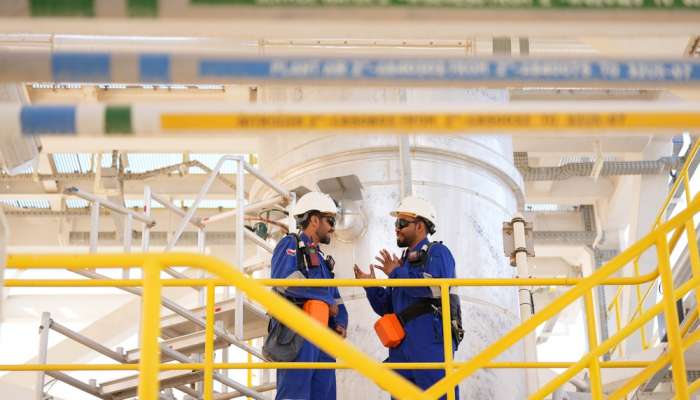
MUSCAT: The Ministry of Energy and Minerals is developing an integrated health, safety and environment (HSE) system for Oman's oil and gas sector, focusing on stronger legislation, governance, risk management and emergency preparedness to protect workers and the environment while improving operational efficiency and sustainability.
The ministry said its strategic and regulatory role includes developing legislation governing the sector, particularly the Oil and Gas Law, which sets requirements for protecting people, the environment and property. Concession agreements with operating companies also require compliance with national laws, standards and regulations and the adoption of international best practices.
As part of its supervisory role, the ministry monitors the performance of operating companies and conducts field inspections to assess implementation of HSE plans across concession areas.
The efforts are showing measurable improvements in safety performance. In 2025, around 321 million working hours were recorded across sector operations, compared with 285.5 million hours in 2024. Vehicles and other operations covered approximately 503 million kilometres, up from 433 million kilometres a year earlier.
Despite the increase in operational activity, lost-time accidents fell by 23% to 30 cases in 2025. Serious traffic accidents declined by 33% to 10 cases, while no fatalities were recorded.
Zainab bint Ali Al-Saadi, Director of the HSE Department at the Ministry of Energy and Minerals, said HSE had become an integrated institutional approach covering all stages of operations, from planning and design to risk reduction, operation and emergency response.
She said the ministry is strengthening the legislative and regulatory framework while promoting prevention and continuous improvement to protect lives, preserve the environment and ensure sustainable operations in line with international best practices.
The ministry's HSE strategy focuses on developing a strong safety culture, supporting sustainable development, improving emergency preparedness and business continuity, strengthening sector capabilities and accelerating progress towards Oman's net-zero emissions target for 2050.
Al-Saadi said companies are implementing management systems aligned with international standards and unified standards of the Oman Energy Association. Greater emphasis is also being placed on field leadership, human-performance programmes, training and awareness campaigns, early reporting of risks and empowering workers to stop work when necessary.
Worker wellbeing is also receiving increased attention through occupational and mental health programmes and improved medical preparedness at operational sites.
Transportation safety is another priority. The sector is expanding journey-management systems using vehicle monitoring technologies and tools designed to detect driver fatigue and distraction, while strengthening compliance with procedures governing movement between work sites.
Environmental measures include compliance with national environmental regulations and the adoption of international environmental-management standards by some operations.
The ministry is also expanding carbon-management initiatives, including efforts to achieve zero routine gas flaring by 2030, reduce methane emissions, improve energy efficiency and increase the use of renewable energy.
Technology is playing an increasingly important role in the HSE system, with companies and regulators using artificial intelligence, data analytics, smart monitoring systems and digital reporting platforms to identify risks, report incidents in real time and accelerate responses.
The ministry said the overall approach is aimed at embedding health, safety and environmental protection into the efficiency and sustainability of Oman's oil and gas sector through stronger regulation, effective governance, digital transformation, innovation and continuous improvement.