Tuesday 22 / September / 2026
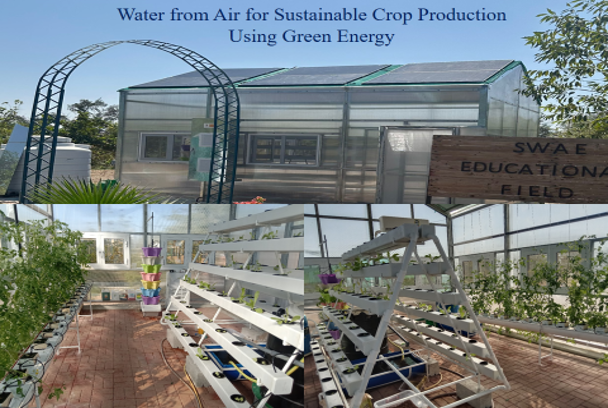
A research project has explored the potential of harvesting water from the air and combining it with solar-powered greenhouse and hydroponic systems to support sustainable agricultural production in the Sultanate of Oman. Funded by the Strategic Research Program of the Research and Innovation Authority in collaboration with the Ministry of Agriculture, Fisheries and Water Resources, the project, titled “Feasibility Study to Extract Water from Air and Utilize it in Salt-Affected Lands,” was led by Dr. Ahmed Al Busaidi, a researcher at the College of Agricultural and Marine Sciences at Sultan Qaboos University.
Dr. Al Busaidi examined the feasibility of integrating atmospheric water harvesting (AWH) technology with hydroponic farming and solar energy as a potential approach to agricultural production in areas affected by soil salinity and water scarcity. As part of the research, he and his team assessed different locations across Oman to determine where atmospheric water harvesting could be most effective. The study identified several areas with favorable conditions, including parts of southern Oman near the borders with Yemen and Saudi Arabia, the northern coastline, and selected locations in the central regions. The most appropriate use of the harvested water would depend on the characteristics of each location. In more urbanized areas along the northern coastline, the water could potentially support drinking and industrial uses, while southern areas could be better suited to agricultural applications. Central and remote regions could benefit from a combination of drinking and agricultural water production.
The research team also evaluated the productivity of different atmospheric water harvesting machines. Depending on weather conditions and machine capacity, the systems were able to produce up to 40 or 100 liters of water per day. The project subsequently integrated atmospheric water generators with solar energy and a hydroponic farming system, and a new greenhouse was constructed to test crop production using renewable energy and water harvested directly from the air.
According to Dr. Al Busaidi, results showed notable differences between crops grown in the controlled greenhouse environment and those cultivated outdoors. Greenhouse-grown tomato plants recorded an average chlorophyll content of 25.5 and reached an average height of 186 centimeters, compared with a chlorophyll content of 8.23 and a height of 76.5 centimeters among outdoor plants. Lettuce grown under controlled greenhouse conditions also recorded higher chlorophyll levels and larger leaves, demonstrating the potential benefits of optimized growing conditions.
The study found that the integrated system could offer both economic and environmental advantages. Greenhouse production allows crops to be cultivated throughout the year, reducing seasonal limitations and potentially providing farmers with more consistent income. The use of solar energy can also reduce dependence on conventional energy sources and lower operating costs, while surplus electricity generated by the system could be exported to the power grid as an additional potential source of revenue.
The research also highlighted the wider potential of sustainable greenhouse systems to address challenges including water scarcity, soil salinity, limited arable land, and harsh climatic conditions. Such systems could support the cultivation of high-value crops, diversify agricultural production, and contribute to food security in arid regions. At the same time, the project identified areas requiring further development, particularly the management of nutrient levels and pH fluctuations in hydroponic systems.
Dr. Al Busaidi recommended greater investment in advanced automation technologies, including artificial intelligence (AI), to improve the monitoring and management of water, nutrients, and environmental conditions. AI-enabled sensors and connected technologies could allow these factors to be adjusted in real time according to crop requirements, helping reduce waste and improve resource efficiency. He also recommended expanding production to include additional high-value crops such as medicinal plants and exotic fruits, strengthening the integration of renewable energy technologies, and encouraging adoption through technical training, public awareness initiatives, and appropriate incentives. In addition, he highlighted the potential use of sustainable greenhouses for research, education, and eco-tourism.
The research team included Dr. Al Busaidi, Dr. Adil Al Mahdouri, Dr. Hamed Al Dhuli, Eng. Zahir Salmani, Eng. Seif Al Tubi, Eng. Dawod Al Qasmi, Eng. Badriya Al Hosni, and Dr. Buthaina Al Wahaibi.