Saturday 26 / September / 2026
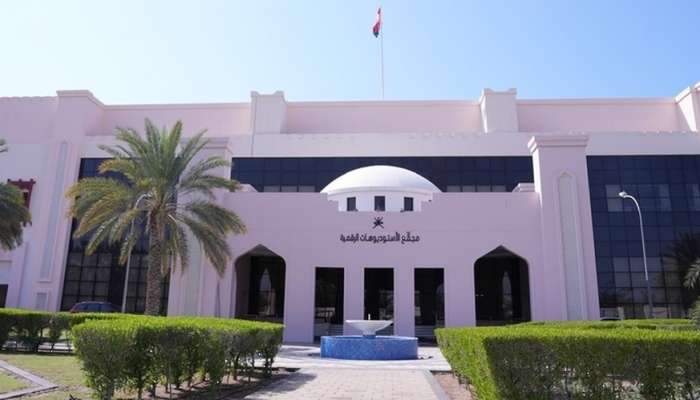
Muscat: The Ministry of Information’s achievement of six awards in the main competitions of the 26th Arab Radio and Television Festival in Tunis reflects sustained efforts to advance the Omani media message. It also demonstrates that these accolades are the result of a process involving multiple stages of media production.
The achievement further highlights the breadth of production at the Ministry of Information and the diversity of its formats and content, as well as the integration of efforts and the cohesion of qualified media professionals. It reflects their experience and capabilities in creativity, planning, developing ideas, writing, preparation, production, and execution, ultimately resulting in impactful media content capable of competing at regional and international media events.
Mohammed bin Said Al Balushi, Undersecretary of the Ministry of Information, affirmed that the Ministry, represented by Oman Radio and Television and the News Center, receiving six awards at the Arab Radio and Television Festival represents a qualitative shift in the level of Omani media participation. He noted that winning at this prestigious festival, which brings together Arab media institutions with extensive experience, reflects the level of development taking place in Omani media.
He added that the awards reflect the efforts made to develop radio, television, and news content and raise it to a level capable of competing regionally and internationally. They also demonstrate the competence and professionalism of those involved in preparing, presenting, directing, and producing news reports.
He pointed out that the results underscore the importance of investing in Omani media talent through the training and professional development provided by the Media Training Center, as well as through continued support and encouragement for media professionals. He explained that developing skills is a fundamental pillar for improving content quality and strengthening its competitiveness.
He hoped that this achievement would be leveraged to continue producing high-quality, purposeful media content and to raise professional standards and efficiency across various fields of media, both governmental and private. This, he said, would contribute to building a more sustainable Omani media experience, while strengthening investment in national talent and improving media content in the coming period.
The documentary film “The Arabian Humpback Whale,” which won first prize in the television documentaries category, presents a documentary experience exploring the marine environment and biodiversity through an approach combining research, information, and visual storytelling. It addresses a subject connected to Oman’s environment in a documentary format, demonstrating the importance of presenting environmental issues through visual narratives capable of conveying information and highlighting the uniqueness of a particular place.
The film team explained that the subject was chosen based on the importance of preserving and sustaining the environment and addressing key issues related to it.
From the marine environment to youth issues, the program “Youth Talk” won first prize in the television talk-show category. The program focuses on young people’s interests and concerns, relying on the selection of topics and guests, episode development, and dialogue management to create space for discussion of issues affecting this segment of society.
In another area of television production, the news report “The Apricot Blossom Season in the Village of Wakan” won second prize in the news reports category. It presents details of an agricultural season associated with the village of Wakan, offering viewers a glimpse into local life and the environment while highlighting the distinctive character of the place and its seasonal features.
Dhiaa bin Abdullah Al Nofali, the report’s producer, explained that the idea originated from the unique apricot blossom season in the mountainous village of Wakan and the exceptional scene it creates, when the agricultural terraces are covered in white.
He noted that the beauty of the scene was the starting point for transforming it into a news story by highlighting the beauty of nature and the resources found in the village, while incorporating some literary expressions that add an aesthetic dimension to the imagery without compromising the report’s news character.
He explained that the report’s preparation was based on several elements, foremost among them linguistic accuracy, image quality, the logical sequencing of ideas, and the selection of sound effects that complement the narration and enhance the atmosphere of the scene. The report also sought to document the season by observing the presence of visitors and making use of small visual details, including a bee landing on apricot blossoms. This helped achieve integration between the visuals, the content, and the essence of the story.
He emphasised that Oman’s environment is rich in cultural, heritage, and tourism content, offering broad opportunities for producing local reports that can reach a wider Arab audience when presented in a purposeful and valuable style worthy of publication.
This diversity extends to radio production, with Oman Radio winning three awards in the main radio competitions, spanning cultural and economic programs as well as drama. The winning works offer different examples of how sound, storytelling, and radio production techniques can be used to deliver content.
In the cultural programmes category, “What the Shadow Said” won first prize. The literary programme focuses on characters appearing in literary works and texts, bringing them back to life through a dramatic approach that gives them a voice and space to express themselves. It creates a closer relationship between the characters and listeners and encourages audiences to seek them out and learn more about them through the original works in which they appeared.
Ahmed bin Salem Al Kalbani, the programme’s producer and presenter, explained that the work relies on radio drama techniques, storytelling, virtual interviews with characters, memory recall, and sound and production effects that help build the scene and deepen the listener’s experience.
He noted that one episode featured the character “Al-Ghafir” from the novel “The Exile of Al-Ghafir,” allowing the character to speak about her pain and concerns, her presence in the text, and the confrontations she experienced. The treatment transfers the character from the pages of the novel into a dramatic space through which aspects of her experience are revisited.
He explained that it is based on bringing literary characters to life and presenting them dramatically in a way that enables listeners to engage with them and understand their dimensions. He noted that the use of voice, storytelling, and sound effects helps construct the character’s world and reshape its relationship with the listener. The aim, he said, is to make the experience a gateway to the original literary works and encourage audiences to read them.
In the economic programmes category, “Hands That Bear Fruit” won first prize. It is an example of the development-oriented radio programs produced by Oman Radio to support and highlight the efforts of women and productive families by exploring experiences originating in villages and rural areas and presenting them within a context connected to place, craft, and identity.
Khalid bin Abdullah Al Salami, the programme’s producer and presenter, explained that the concept involves a virtual audio journey to locations where Omani women work. There, they discuss the crafts or professions in which they excel and how the fruits of their work benefit them, their families, and the surrounding community. This highlights the economic and social value of these activities and their role in transforming inherited skills and knowledge into sources of production and sustainability.
He added that the script was designed to harmonise with accompanying sound effects that recreate the real-life journey, allowing listeners to experience its details from beginning to end, discover the work environment and its sounds and details, and appreciate the value of these crafts and their impact on women, families, and society.
He explained that the programme’s concept is based on engaging with these examples within their natural environments, noting that the experiences featured demonstrate Omani women’s ability to develop traditional heritage and transform it into contemporary projects and products. The program seeks to present these stories in a way that remains close to the people behind them and connected to the places where they originated.
The program “Al-Farahidi,” which won first prize in the drama competition, uses radio drama to recount the life of the renowned Omani scholar Al-Khalil bin Ahmed Al-Farahidi, taking listeners back to the era of Arabic linguistics and tracing part of Al-Farahidi’s journey in researching poetic rhythm and establishing the science of Arabic prosody.
Rasha Al Balushi, the programme’s producer and presenter, explained that the work recreates the atmosphere of Basra and its markets, using everyday sounds—from market activity and the sounds of copper to craftsmen’s hammers—to construct the environment in which the character moves. It also features dialogues with his students and family members, as well as his periods of solitude, presenting Al-Farahidi in a dramatic context that reveals his journey of research, reflection, and determination to discover and define poetic rhythm.
She added that the production combines artistic appeal with historical documentation, highlighting Al-Farahidi’s contribution to the science of Arabic prosody and its role in preserving Arabic poetry and regulating its rhythm. It offers listeners an experience that revisits an aspect of Oman’s scientific and cultural heritage while connecting a historical figure with a legacy that remains present in Arabic culture and language.
She noted that presenting the character of Al-Khalil bin Ahmed Al-Farahidi through a radio drama was intended to bring listeners closer to the figure and his legacy through the medium of drama. She explained that constructing the atmosphere, sounds, characters, and dialogue helped transport listeners to the environment in which Al-Farahidi lived, emphasizing that the production seeks to highlight his influence on Arabic language, poetry, and culture in a manner accessible to contemporary audiences.