Tuesday 17 / November / 2026
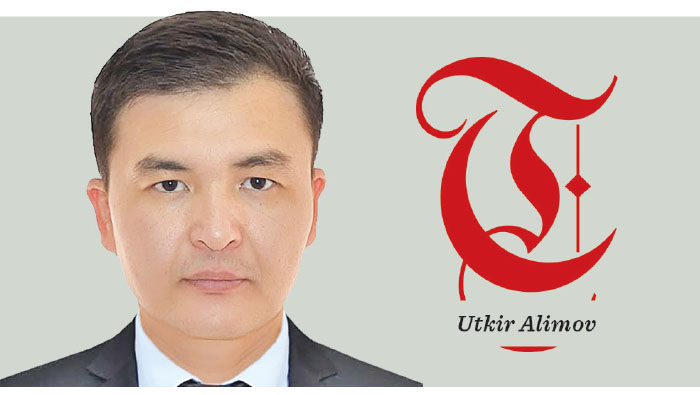
Relations between the Republic of Uzbekistan and the Sultanate of Oman continue to develop steadily, underpinned by mutual trust, respect and shared interests. Occupying strategically important positions in Central Asia and the Arabian Peninsula, the two countries are strengthening political dialogue while exploring new opportunities for cooperation in trade, investment, transport, logistics, culture and education.
The visit of Uzbekistan’s President Shavkat Mirziyoyev to Muscat and his high-level talks with His Majesty Sultan Haitham bin Tarik are particularly significant in this regard. The discussions provide an important opportunity to expand mutually beneficial cooperation, inject fresh momentum into economic ties and identify priorities for long-term partnership.
Diplomatic relations between Uzbekistan and Oman were formally established on April 22, 1992. Oman was among the countries that recognised Uzbekistan’s independence in December 1991. The Sultanate opened its embassy in Tashkent in April 2010, while Uzbekistan established its diplomatic mission in Muscat in July 2018.
Over the past 34 years, the two countries have built a solid foundation for political dialogue. The visit of Uzbekistan’s Foreign Minister to Muscat in 2024, followed by the Omani Foreign Minister’s visit to Tashkent in 2025, contributed to strengthening bilateral engagement. On June 30, 2026, Muscat hosted the ninth round of political consultations between the two foreign ministries.
Uzbekistan and Oman also maintain close cooperation within the United Nations, the Organisation of Islamic Cooperation and the Central Asia–Gulf Cooperation Council dialogue framework. Their foreign policies share a commitment to peace, stability, respect for sovereignty and the peaceful resolution of international disputes through diplomatic means.
Economic cooperation is emerging as one of the most promising areas of bilateral relations. Bilateral trade stood at US$2.3 million in 2025, while trade turnover reached US$3.3 million during the first nine months of 2026, reflecting positive momentum in commercial exchanges.
Significantly, the two countries have set a target of increasing bilateral trade to US$500 million. Achieving this ambitious goal will require stronger cooperation in agriculture, food processing, textiles, energy, mining, transport and logistics.
Several investment projects are already being implemented in Uzbekistan, including initiatives in the food industry, the modernisation of logistics centres and the development of modern hotel infrastructure in Tashkent. Another notable example of practical cooperation is the establishment of a food testing and certification centre in Uzbekistan by Oman’s Atyab International Services, supporting compliance with international standards and facilitating access to export markets.
Transport and logistics cooperation is gaining particular strategic importance. In June 2026, Oman’s Asyad Group completed a transaction to acquire controlling stakes in two Uzbek logistics platforms, Universal Logistics Services and Highway Logistics Center. The agreement creates new opportunities to connect Oman’s seaports with Uzbekistan’s domestic transport networks and expand multimodal freight operations.
The ports of Sohar, Salalah and Duqm are of particular interest to Uzbekistan. As a doubly landlocked country, Uzbekistan places considerable importance on diversifying its international trade routes. Oman’s direct access to the Indian Ocean and its advanced maritime infrastructure offer valuable opportunities to strengthen Uzbekistan’s trade links with markets in South Asia, the Middle East and Africa.
New opportunities are also emerging in tourism. On July 3, 2026, Oman Air launched direct flights between Muscat and Tashkent, marking an important step towards improving connectivity between the two countries. Reciprocal visa-free travel arrangements are further encouraging business visits, tourism and people-to-people exchanges.
Uzbekistan’s historic cities of Samarkand, Bukhara and Khiva, together with its rich Islamic heritage, traditional craftsmanship and renowned hospitality, offer attractive destinations for Omani visitors. Likewise, Oman’s historic landmarks, remarkable natural landscapes and distinctive cultural traditions are attracting growing interest among Uzbek travellers.
Cultural and educational cooperation continues to strengthen the ties between the two nations. With support from the Sultanate of Oman, a modern library has been established at the Abu Rayhan Beruni Institute of Oriental Studies of the Academy of Sciences of Uzbekistan. The Sultanate of Oman Research Centre has also been established at the International Islamic Academy of Uzbekistan, providing an additional platform for academic and cultural exchange.
The Uzbekistan Cultural Days and an exhibition of traditional handicrafts, held in Muscat on November 12–13, 2026, further highlighted the historical and cultural bonds shared by the two peoples.
President Shavkat Mirziyoyev’s state visit to the Sultanate of Oman represents an important opportunity to translate political trust into tangible economic results, open access to new markets and reinforce long-term cooperation.
Above all, the growing partnership between Uzbekistan and Oman promises to benefit not only the peoples of both countries but also the wider development of economic and cultural ties between Central Asia and the Arabian Peninsula.
* The author is the Editor-in-Chief of the Uzbekistan National News Agency (UzA)