Thursday 19 / November / 2026
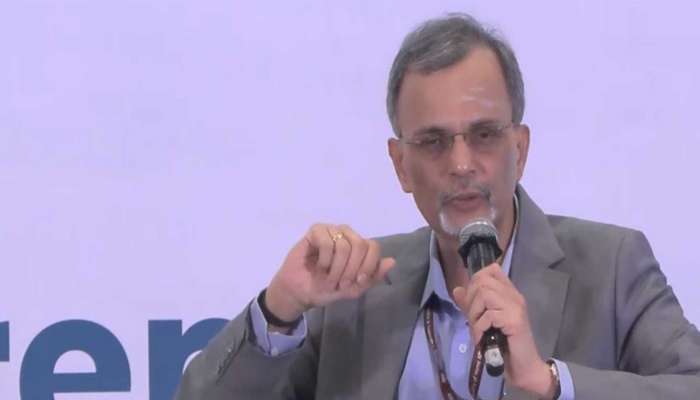
Mumbai: India may have seen the worst of its unsettled trade and tariff phase with the United States, with signs that bilateral friction is beginning to settle ahead of a potential trade agreement around December, Chief Economic Adviser (CEA) V. Anantha Nageswaran said on Thursday.
Addressing the 65th General Assembly and Annual Meeting of the World Federation of Exchanges (WFE) in Mumbai, hosted by the National Stock Exchange (NSE), Nageswaran noted that India’s relationship with Washington turned problematic since January 2025 following reciprocal tariffs, additional duties imposed in August last year over Russian crude purchases, and rhetoric affecting the Indian diaspora and services exports.
"In the last few weeks or so, there are signs of this settling down, and if India is able to sign a trade deal with the United States in early December or thereabouts, then this relationship would have settled. In some sense, we may have seen the worst of the unsettled phase behind us," he said.
Alongside US trade headwinds, the CEA highlighted external pressures from global supply chokepoints, higher developed-world interest rates, and capital outflows triggered by the global artificial intelligence (AI) investment frenzy—given the absence of a direct AI stock play in India.
However, he noted that foreign capital is returning sharply as oil prices cool below USD 100 per barrel and AI valuation risks emerge, bringing USD 11.3 billion in foreign portfolio inflows in just the first 18 days of November.
"As oil prices begin to decrease and as the AI bubble comes down to realistic levels, India remains poised to be the big beneficiary in the course of the next financial year," Nageswaran said, adding that earlier currency pressures from AI outflows "will now likely turn into a source of currency strength in the coming years."
Looking toward Viksit Bharat 2047, he flagged five unique challenges: fractured geopolitics, weaponised sea lanes, China’s manufacturing scale, climate variability and the energy trilemma, and AI-led job risks alongside social media’s impact on youth cognitive skills.
To counter these, Nageswaran stressed building strategic leverage. "Closing technology gaps will buy resilience for India, but agriculture, trade skills, and human-centric services will buy leverage for India," he said, urging focus on agro-processing and skilled trades for aging global economies.
Reviewing India’s post-pandemic trajectory over six years, he pointed to sustained approx. 7 per cent real GDP growth, lifting roughly 500 million people above the USD 4.20-a-day moderate poverty line, with rural poverty falling faster than urban.
"Unless growth finds its way to the bottom of the pyramid, then in a large country like ours, mere headline growth numbers will not be satisfactory or contribute to social and economic stability," he said, expressing confidence in India's sub-1 per cent current account deficit and compressed bond risk premiums.
Negotiations between New Delhi and Washington over a landmark Bilateral Trade Agreement have reached the final stretch, following an interim framework announced in February 2026 that aimed to lower steep US tariffs on Indian goods from 50 per cent to 18 per cent.
However, the pact's legal landscape shifted dramatically later that month when the US Supreme Court struck down the administration's emergency reciprocal tariffs, prompting Washington to draft a replacement tariff architecture and launch new Section 301 trade investigations into forced labor and industrial overcapacity.